Imagine this scene with me:
As I pass under the arches that hold Museo Correr and step into Piazza San Marco, pigeons scatter everywhere and settle, clearing my view of a sea of people looking upward at golden mosaics.
What is my instinct in this glorious moment?
…
To reach into my pocket,
pull out my phone,
and…
take a photo.
And I assume I am not alone in this. I know this is true because when I said people were looking up at St. Mark's, what I really meant was that everyone had their phone out, taking photos. When we encounter something beautiful or interesting, we are pulled to capture it…and move on. The idea of
pausing,
lingering,
and beholding
in a space longer than five minutes sounds ludicrous today, especially as people tour the world. Why? Because we want to see the world as much as and as fast as possible.
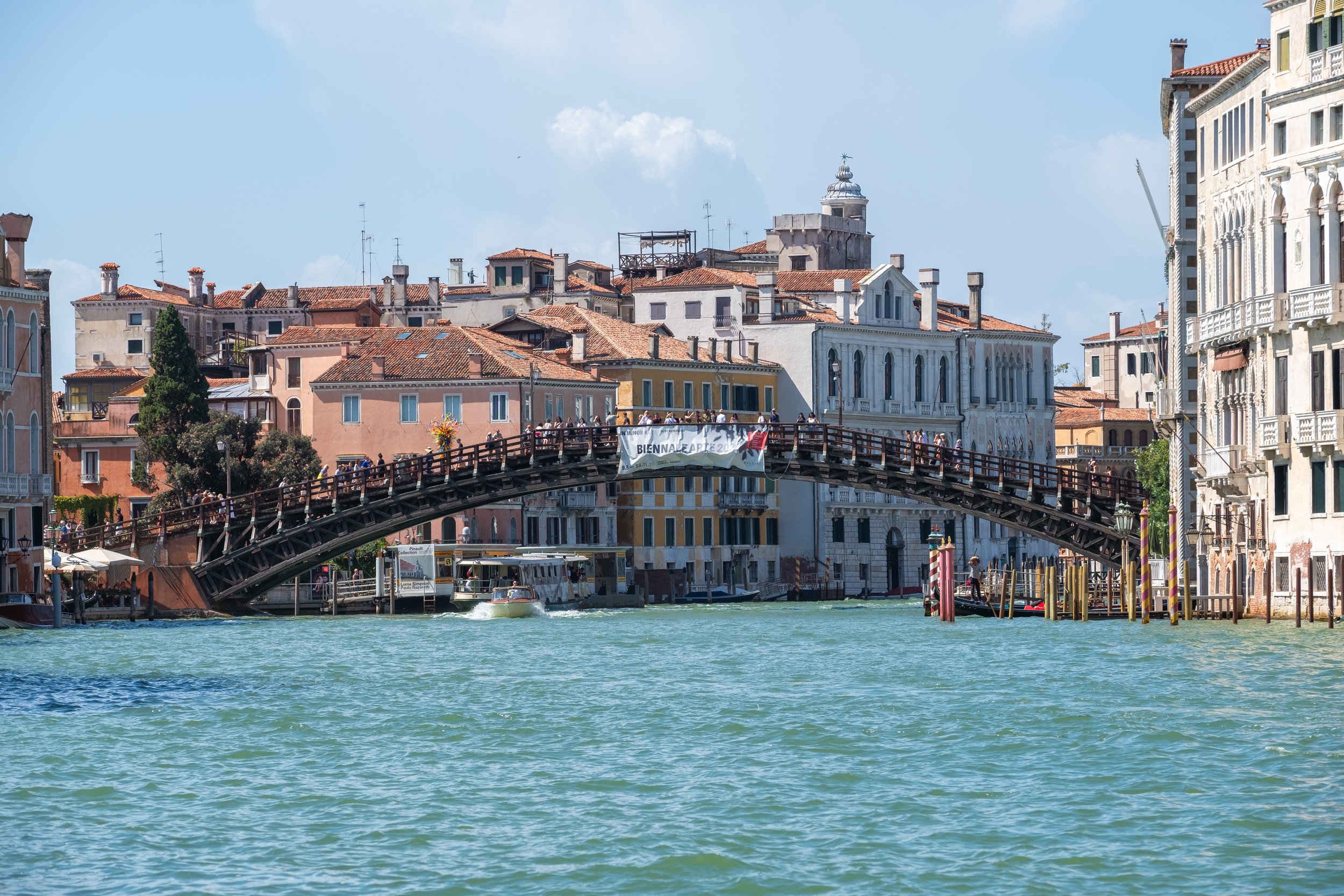
Academia Bridge, a popular place to take photos from
But are we really seeing the world at all?
This isn’t just me, and this isn’t just Venice. The rise of globalization and social media has given way to mass tourism: cheap flights, algorithm-fed bucket lists, the same dozen photo spots for every city (the Trevi Fountain shot, the Santorini blue-domes shot, the Piazza San Marco pigeons shot). Destinations have become flattened by touristic consumerism, and Venice itself has become one of the most extreme examples of this on earth.
Gondoliers, who were once considered part of a romantic profession, now entertain tourists in what seems like a theme park attraction of experiencing the romance of the canals. But they are not a costume. They are not part of the scenery we came to photograph. They are men and women, bearing the image of God. And when we see them only as an aesthetic detail in our own experience, we have failed to actually see them.
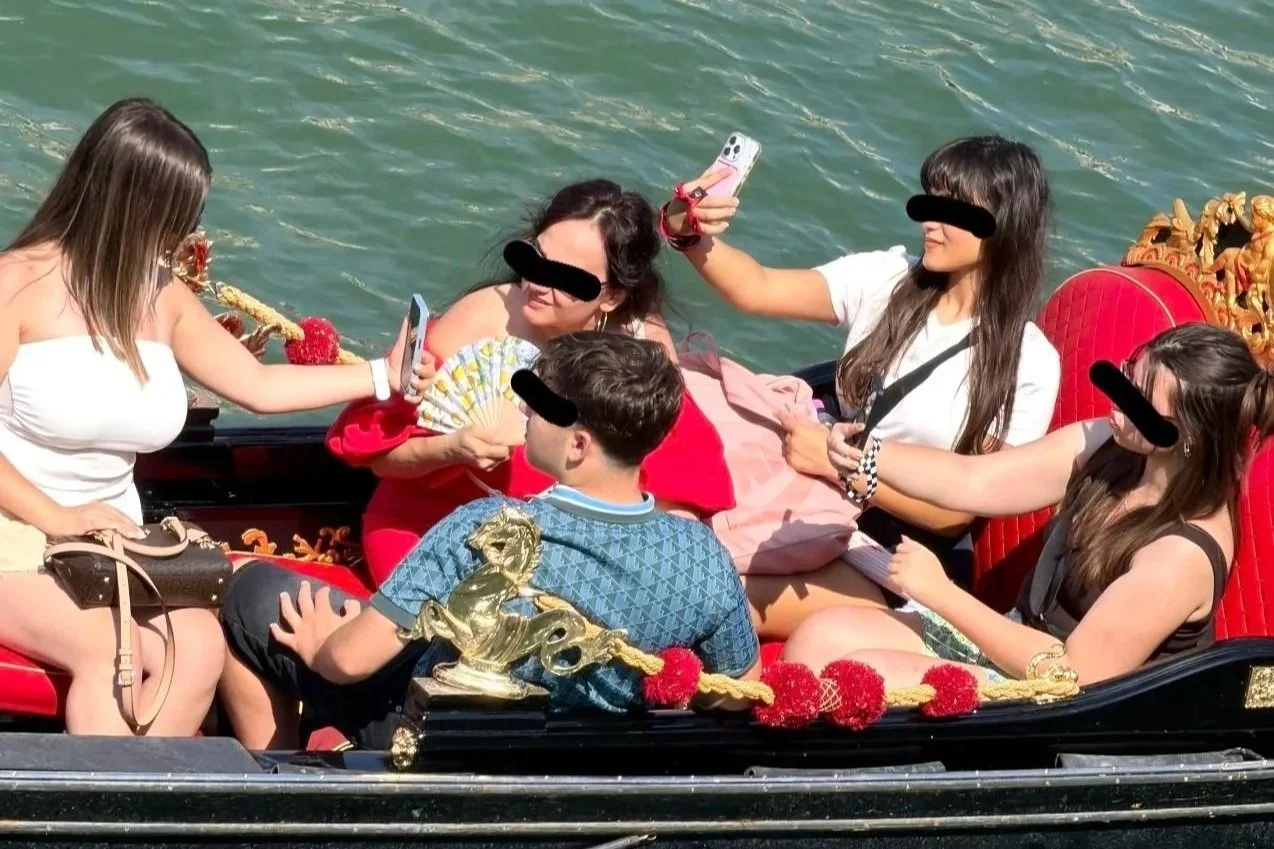
Image taken from my living room window.
Venice is not a theme park.
A theme park is built to be used. It is designed for every ride, every gift shop, every character in costume to exist for our delight and…nothing else. But Basilica di Santa Maria della Salute was not built for our feeds. It was built as an offering of thanks to God after the Black Plague nearly emptied the city. The interior was meant for kneeling, not framing the perfect shot. The canals were not created as a backdrop for gondola selfies; for centuries, they were simply how people got from one place to another. While tourists trample through this ancient city, locals are priced out of apartments that become Airbnbs for our three-night stays, and shopkeepers who sold bread and fish for generations now sell Murano glass keychains. Why? Because this is what survives now.
Over the past few decades, the historic center’s population has fallen below 50,000 for the first time in centuries—down from roughly 120,000 in 1980.¹ At the height of the tourism season, there are nearly 40 tourists for every single resident.² In 2022, when I first studied in Venice, the number of tourist beds in Venice officially outnumbered the number of people who actually live there.³ Venice now has more room for guests passing through for a few days than for a life lived here.
The real heartbreak: we keep treating Venice like a theme park, even though it is not. Somewhere along the way, we stopped encountering and enjoying places, and started restlessly consuming them for our own gain.
This restlessness isn’t new.
Three thousand years ago, a king who had access to every pleasure his world could offer wrote, "the eye is not satisfied with seeing, nor the ear filled with hearing" (Ecclesiastes 1:8). We tend to think our hunger to see everything, everywhere, as fast as possible, is a modern “sickness,” a symptom of phones and algorithms. But it's older than modern technology. It's the human heart. Our hearts are restless, always reaching for the next thing. We are mistaking movement for meaning.
But this is not surprising. If we have forgotten how to rest at home, too, why would we know how to rest somewhere new?
Centuries ago, Augustine put language to our remedy: “Our hearts are restless until they rest in You.” Not until we’ve seen all of Europe, St. Mark’s Basilica, or captured a gondola at sunset.
Until they rest in God.
¹ Venice Insider Guide, "Venice population vs tourists: update 2026"
² Ibid.
³ Fortune, "Venice charging day trippers $5 entry but angry locals say floating city 'theme park'" (2024)
